


I. Executive Summary
The insurance industry is undergoing an accelerated transformation driven by new product categories, evolving risk models, rising customer expectations, and mounting regulatory scrutiny. Insurers are no longer operating in a stable, predictable environment as today’s landscape is defined by usage-based auto insurance, embedded insurance partnerships, digital-first health plans, micro-insurance models, and increasingly complex commercial risk segments. At the same time, compliance frameworks are tightening, audit trails are expanding, and customer expectations have shifted towards instant, omnichannel, 24/7 service.
In this environment, traditional in-house operations are struggling. Legacy systems, talent shortages, manual workflows, and escalating operational costs have pushed insurers to rethink how core processes, from claims administration to underwriting support, should be delivered.
Insurance BPO is no longer viewed as a back-office cost arbitrage model. Instead, it has become a strategic operating partner enabling insurers to modernize processes, accelerate cycle times, enhance accuracy, and scale efficiently. Today’s outsourcing deliver high-value capabilities across claims management, policy administration, customer experience operations, analytics, fraud prevention, compliance monitoring, and digital process automation. A growing focus area is image annotation for computer-vision-driven claims and underwriting workflows, where BPO teams support AI models by labelling vehicle damage, property conditions, medical documentation, and visual risk indicators, resultantly, improving model accuracy and reducing claims turnaround time.
By 2026 and beyond, Insurance Process Outsourcing will continue to advance as a foundational operational pillar for global insurers. Organizations leveraging modern BPO models can reduce operational costs, expand capacity during peak volumes, strengthen regulatory compliance, and deliver superior, digitally enabled customer journeys. The role of BPO partners is shifting from transaction processing to end-to-end transformation, powered by automation, analytics, and deep domain specialization.
Insurers that adopt next-generation BPO models will be better positioned to compete on speed, accuracy, and customer experience while maintaining the operational resilience required in an increasingly regulated and volatile industry. This evolution aligns with emerging patterns in the industry, as highlighted in several 2026-focused insurance outlooks such as Insurance BPO Trends.
II. Understanding What’s Driving Change by 2026
Certain macro shifts, digital acceleration, regulatory pressures, and customer expectations are reshaping the operational landscape for global insurers.
1. Rising Operational & Regulatory Complexity in Insurance
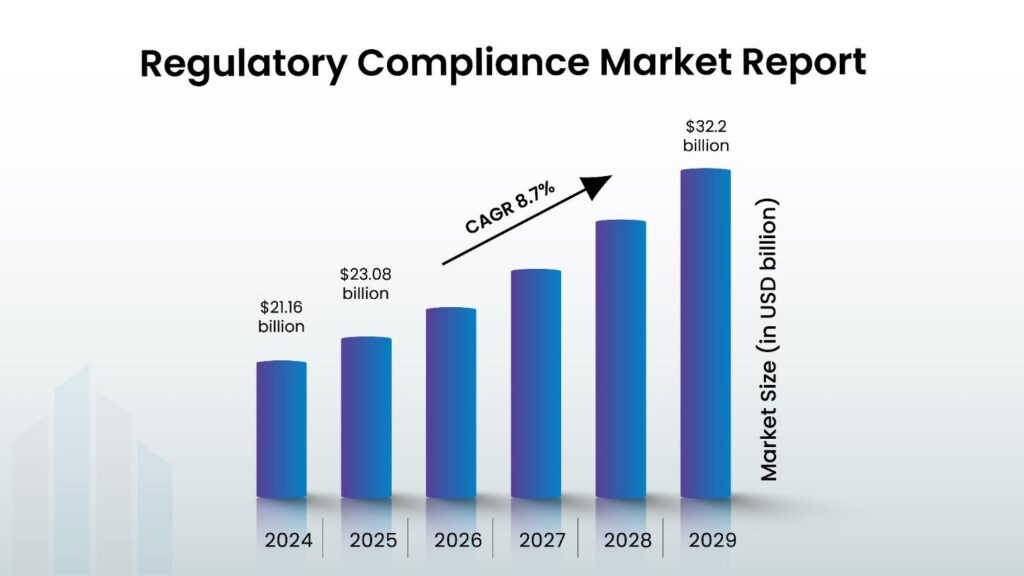
- Insurers now manage diverse product portfolios including life, health, auto, property, commercial, liability, etc. Each product line carries different underwriting rules, claims workflows, regulatory compliance and documentation needs.
- Claims volumes are rising, especially with more frequent natural disasters, increasing auto and commercial lines exposures leading to higher demand for claims processing capacity.
- Also seen in industry analyses, exploring the rise of computer-vision-led insurance annotated visual datasets are transforming insurance operations and becoming foundational for automation accuracy.
- Regulatory pressure, data privacy laws, compliance audits, and risk-management scrutiny are increasing operational overhead.
2. Rapid Digital Transformation & Customer Expectations
- Customers increasingly expect fast, digital, and seamless insurance experiences for online purchase, digital claims filing, instant policy changes, 24/7 support. This pushes insurers to adopt automation, cloud platforms, digital customer service, and modern data systems.
- As insurers adopt automation and analytics, operations become more complex, making many insurers prefer outsourcing to specialists with domain and technological expertize.
3. Shift in Focus from Cost-Saving to Value-Added Services
- Initially, Insurance BPO was largely for cost arbitrage and headcount reduction. But now, insurers demand more: automation, turnaround time reduction, higher accuracy, data-driven risk & claims management, compliance support, customer service excellence.
- These outsource teams are increasingly evaluated not just on cost, but on value delivered speed, accuracy, flexibility, compliance, customer satisfaction, and reporting capabilities.
4. Pressure for Scalability, Flexibility & Risk Management
- Insurance business is seasonal, cyclical, or event-driven (e.g., natural disasters, accidents) requiring scalable capacity. Building large in-house teams risks underutilization; outsourcing offers elastic scalability.
- Outsourcing also enables insurers to manage operational risk, compliance risk, and data-security risk by partnering with specialized, audited providers.
III. Market Size & Projections
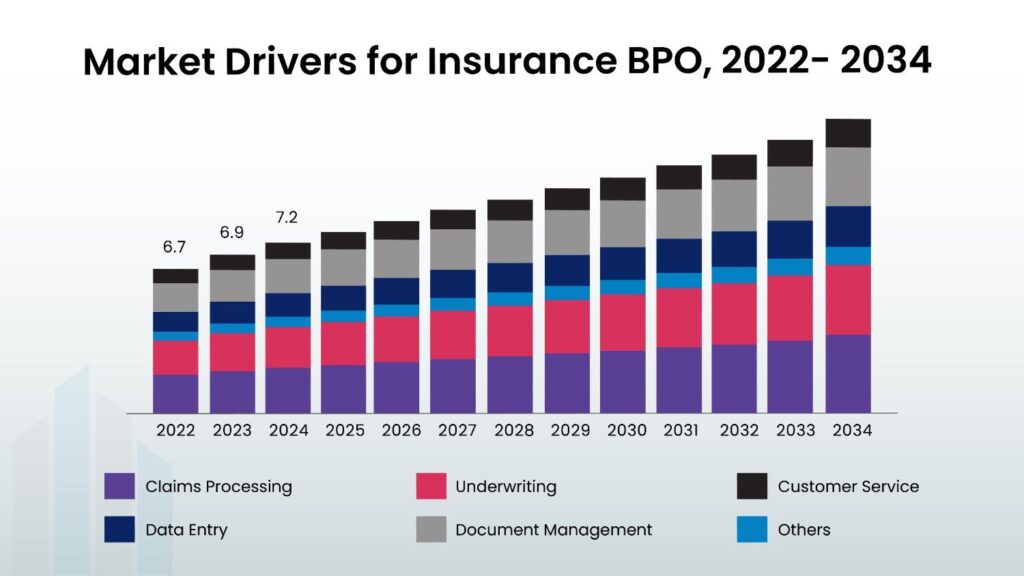
The global Insurance Claim Process Outsourcing landscape is entering a period of accelerated expansion, driven by insurers’ urgent need to modernize operations, strengthen compliance, and meet rising digital-first customer expectations. Across markets, carriers are shifting from legacy, labor-heavy workflows to scalable outsourced models that combine automation, analytics, and specialized domain expertize. Recent market forecasts point to a clear and sustained upward trajectory, signalling that Insurance BPO is no longer a supplementary cost lever but a foundational component of tomorrow’s insurance operating model. The table below highlights how analysts project the market’s growth direction and momentum over the coming years:
| Estimate | Base Year / Market Size | Forecast / Projection | Impact Area |
| Insurance BPO Market 2034 | USD 9.12 billion (2025) | USD 12.64 billion by 2034 | CAGR ≈ 3.7% (2025–2034) for “core BPO services” |
| 2025–2033 Forecast | USD 7.5 billion | USD 10.4 billion by 2033 | CAGR ≈ 3.6% for baseline showing modest growth. |
| Mid-range projection | ~USD 8.4 billion (2025) | ~USD 11.7 billion by 2029 | Reflects higher growth scenario through technology adoption and also automation |
Takeaway: Consensus across multiple sources suggests the global Insurance BPO market is on track to grow at a moderate but steady CAGR (roughly 3.5% to 5.5%) over the 2025–2035 horizon. The total market could comfortably exceed USD 10–12 billion by early-to-mid 2030s, depending on segmentation and service definitions.
Additionally, this progression is consistent with broader digital solutions and customer experience developments analyzed across the insurance sector, including trends in AI-led support, policy servicing, and self-service ecosystems.
IV. Key Growth Drivers for Insurance BPO in 2026
The insurance industry’s shift toward outsourcing is being shaped by a perfect storm of market forces with economic pressure, rising customer expectations, regulatory tightening, and the need for digital-first operations. Insurers are increasingly recognizing that legacy systems and siloed internal teams cannot keep pace with modern demands. This has accelerated the move toward Insurance BPO partners who bring specialized capabilities, automation frameworks, and operational resilience. The table below summarizes how the global Insurance BPO market is evolving according to recent forecasts.
A. Automation and Human Hybrid Workflows for Back-Office Transformation
The increasing adoption of automation and analytics is transforming traditional insurance back-office tasks (policy admin, claim intake, document management, customer service).
As insurers modernize, insurance providers capable of delivering technology-enabled services become preferred partners shifting BPO offerings from human-heavy to hybrid human + automated workflows.
B. Surge in Claims Processing & Underwriting Outsourcing
Claims processing, has historically the largest BPO sub-segment, and continues to lead demand. One 2024 report estimated that claims processing accounted for ~30% of Insurance BPO demand. With increasing volumes (auto, health, property, commercial lines), and pressure on speed and accuracy, insurers are outsourcing claims, underwriting support, renewals, and policy administration in larger numbers.
C. Demand for Customer Service, Policy Admin & Multi-Channel Support
Insurers are under pressure to deliver omnichannel customer experience: digital onboarding, chat support, 24/7 service, self-service portals. Outsourcing back-office, customer support, and admin operations enables them to stay agile and efficient. This trend is highlighted repeatedly in recent market-outlook reports.
D. Growing Importance of Data Analytics, Risk & Fraud Management Services
With more data, more products, and higher claim volumes, insurers need advanced analytics, fraud detection, risk scoring, compliance reporting services that many outsourced providers are increasingly offering beyond basic processing.
As insurers outsource operational functions, demand grows for outsource partners who can provide value-added analytic insights, risk management, and predictive modelling.
V. Rise of Integrated Insurance Operations as a Scalable Outsource Capability
Insurance Process Automation is evolving beyond single-function outsourcing into integrated, end-to-end operational ecosystems. These integrated models allow insurers to scale rapidly, maintain consistent service quality, reduce fragmentation, and accelerate digital transformation without the overhead of managing multiple vendors or siloed internal systems.
The following section explores how this shift toward integrated operations is reshaping the strategic value proposition of Insurance BPO in 2026 and beyond.
1. Move Toward End-to-End Outsourcing
Rather than just discrete tasks (claims intake, data entry), insurers are gradually outsourcing end-to-end processes. From underwriting support to policy administration, claims processing, customer service, renewals & billing. This integrated approach gives insurers better scalability, consistency, and lower overhead.
2. Emergence of Modular BPO Services
Insurance BPO has evolved into a fully modular ecosystem. The providers offer plug-and-play service components such as claims processing modules, policy administration modules, customer support modules, and analytics and reporting modules. This modularity allows insurers to select exactly what they need based on their operational maturity, business priorities, and growth stage, resulting in far greater flexibility, faster deployment, and more efficient scaling across functions.
3. Outsourced Insurance and Insurtech Partnerships
As digital transformation intensifies, insurance outsourcing companies’ partner (or evolve) into InsurTech-enabled service providers combining traditional BPO capabilities with analytics, automation, and data-driven services. This makes them strategic partners rather than just vendors.
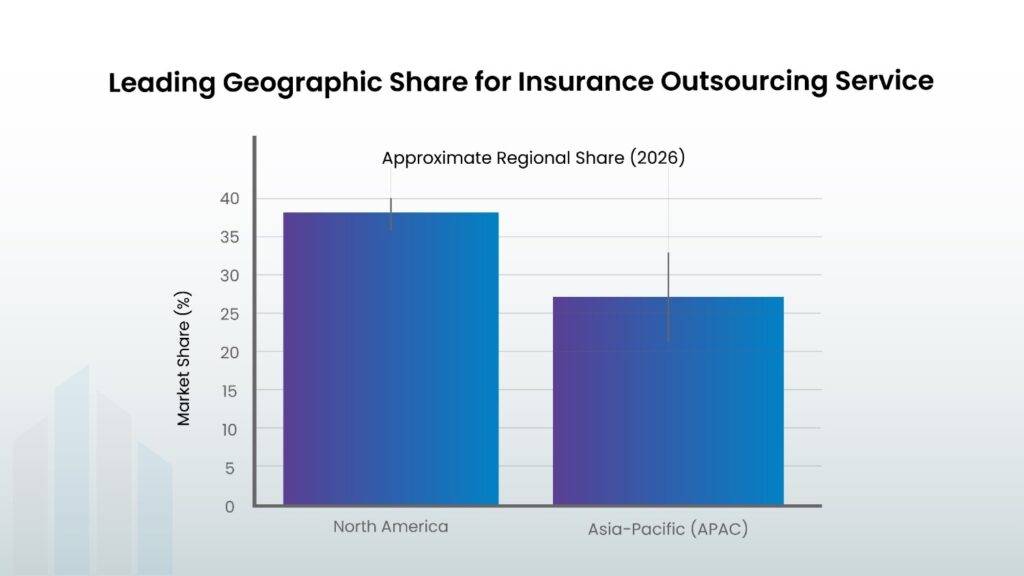
VI. Leading Insurance Outsourcing Service Geographies & Delivery Hubs (2026)
- The global insurance outsourcing market is geographically dispersed. Regions with mature ecosystems including robust talent pools, language skills, cost advantages, will continue to dominate. According to a segmentation report, parts of Asia (particularly the Asia-Pacific region) are among the fastest-growing hubs.
- Historically, countries like India have been prominent for outsourcing insurance back-office operations, given their large talent pool, cost arbitrage, and English proficiency, a trend expected to continue.
- Meanwhile, as services become more complex (analytics, compliance, data security), providers may also look at hybrid-shore (onshore + offshore) models or nearshore delivery hubs to meet regulatory and data-governance requirements.
VII. Critical Strategic Imperatives for Insurance Executives & BPO Decision Makers
In an insurance landscape that is becoming faster, more complex, and increasingly data-driven, companies need partners who can deliver both operational efficiency and strategic insight. IMS Datawise combines deep industry expertise with advanced analytical services to provide insurers with streamline processes, enhance customer experiences, and manage risk with confidence.
- Adopt Hybrid Outsourcing Models: Blend in-house strategic functions like risk management, underwriting, and regulatory compliance with outsourced execution for claims, policy administration, customer service, and data entry. IMS Datawise leverages its industry experience to design hybrid models that maximize efficiency without compromising control.
- Prioritize Automation and Governance: Choose providers offering automation alongside strong data governance, audit trails, compliance support, and risk management.
- Select Modular and Flexible BPO Services: Move away from rigid contracts and adopt modular services in claims, underwriting, support, and analytics. Data shows that modular approaches enable rapid scaling and adaptation to evolving market demands.
- Treat BPO as a Strategic Partnership: Focus on metrics beyond cost, including process speed, accuracy, fraud detection, analytics, and customer satisfaction. Outsourcing partners like IMS Datawise demonstrates how strategic partnerships translate into measurable operational and business gains.
- Plan for Data and Compliance Risks Early: As outsourcing spans geographies and data-intensive functions, embed data privacy, compliance, and risk management from the outset.
- Enable AI-Readiness with High-Quality Data Annotation: As insurers deploy computer vision and automated decisioning, clean labelled data becomes essential. Basic AI readiness includes large-scale image and document annotation for claims, underwriting, and risk assessment, ensuring AI models operate with greater accuracy, consistency, and regulatory defensibility.
VIII. Conclusion
By 2026, outsourced Insurance BPO is set to evolve from a back-office cost-saving strategy into a strategic operational engine delivering automation, scalability, data-driven insights, enhanced customer experience, and robust risk management. Insurers that embrace modular, technology-enabled, outcome-focused outsourcing will gain agility, reduce costs, and strengthen operational resilience. Leading outsource providers, such as IMS Datawise, are equipped with compliance, advanced analytics, and flexible delivery models to meet these evolving demands.
For insurers and operations leaders, the message is clear; start pilot outsourcing projects for claims or policy administration now, build modular contracts, and treat insurance outsourcing as a core operational lever rather than just a cost centre.