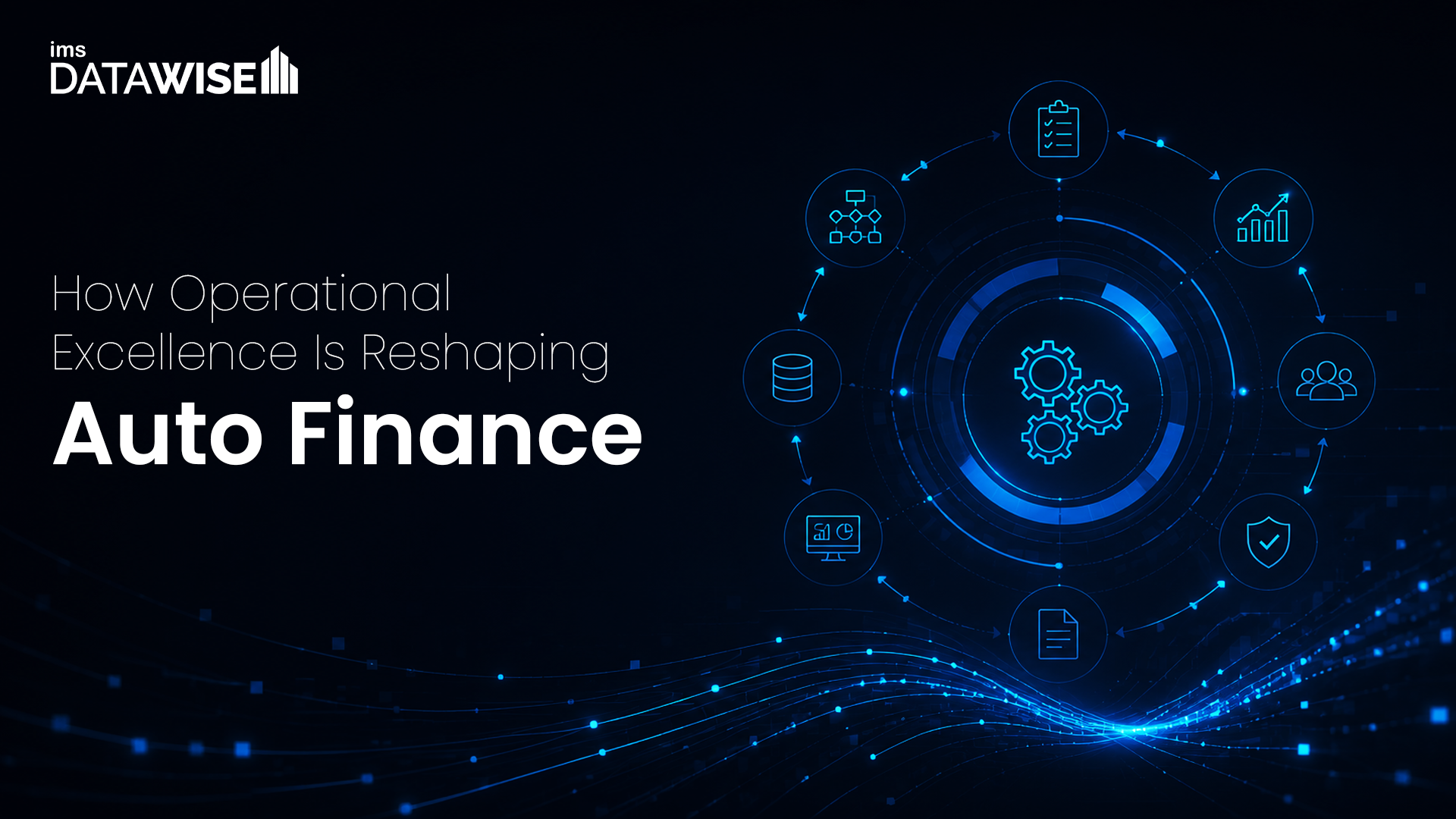

For years, competitive advantage in auto finance was driven by factors such as pricing, lending policies, dealer relationships, and portfolio performance.
Those factors still matter.
But across the industry, a new differentiator is emerging—one that is often less visible but increasingly more influential.
Operations.
As lending environments become more complex, customer expectations evolve, and compliance requirements continue to expand, operational capability is becoming a defining factor in how effectively lenders can grow, adapt, and compete.
The institutions that can process applications efficiently, manage exceptions consistently, maintain visibility across workflows, and deliver seamless borrower experiences are increasingly separating themselves from those relying on fragmented processes and legacy operating models.
In many ways, auto finance is no longer just a lending business.
It is an operations business.

The Growing Complexity Behind Every Loan
Every auto loan moves through a series of interconnected operational workflows.
From application intake and verification to underwriting, funding, servicing, collections, and compliance oversight, multiple teams and systems contribute to the borrower journey.
On paper, these workflows appear straightforward.
In reality, they are often filled with dependencies, exceptions, approvals, and handoffs.
A missing document can delay funding.
An unresolved verification can slow underwriting.
A servicing request may require coordination across multiple teams.
A compliance review can create additional workflow layers.
Individually, these situations appear manageable.
Collectively, they introduce operational complexity that affects speed, consistency, visibility, and scalability.
As loan volumes grow, this complexity often grows faster.

Where Operational Friction Actually Lives
Many organizations invest heavily in technology platforms while continuing to experience operational inefficiencies.
The reason is simple.
Operational friction rarely exists within a single system.
It exists between systems, teams, and processes.
Some of the most common examples include:
Origination Workflows
Loan applications frequently move across multiple platforms before a decision is reached.
Verification requirements, documentation reviews, exception handling, and approval routing can introduce delays when workflows are not standardized or visible.
Funding Operations
Even after approval, funding processes often rely on multiple validation steps, dealer interactions, and documentation reviews.
Without clear workflow governance, bottlenecks can emerge quickly.
Servicing Operations
Borrowers expect fast and consistent support regardless of channel.
However, many servicing environments still rely on fragmented workflows that make it difficult to maintain a unified view of customer interactions.
Collections Management
Collections teams are under increasing pressure to balance operational efficiency, customer experience, and regulatory compliance.
Disconnected workflows often reduce visibility and slow response times.
Compliance Processes
Compliance requirements continue to evolve across lending, servicing, and collections.
When controls exist outside the operational workflow, organizations face increased risk, remediation effort, and audit complexity.
The challenge is not that these activities exist.
The challenge is ensuring they operate as a coordinated system rather than a collection of disconnected tasks.

Why More Technology Doesn’t Always Solve the Problem
Many lenders have invested significantly in digital platforms over the past decade.
Yet operational challenges continue to persist.
This is because technology alone does not create operational excellence.
Organizations often have capable systems for:
- Loan origination
- Customer relationship management
- Document management
- Collections
- Reporting
- Compliance monitoring
The issue is not the absence of technology.
The issue is the absence of orchestration.
Without defined workflows, clear ownership, process visibility, and governance, even the most advanced systems can create additional complexity.
Technology enables work.
Operations determine how effectively work flows.

The Shift Towards Operational Maturity
Leading auto finance organizations are beginning to rethink operations through a broader lens.
Instead of focusing solely on transaction processing, they are focusing on operational maturity.
This includes:
Process Visibility
Understanding where work exists, how it moves, and where bottlenecks occur.
Workflow Governance
Establishing clear ownership, accountability, and escalation paths across processes.
Standardization
Reducing variability in execution while maintaining flexibility for exceptions.
Scalability
Building operating models that can support growth without proportional increases in complexity.
Continuous Improvement
Using operational insights to drive ongoing optimization rather than one-time transformation initiatives.
These capabilities create a more resilient operational foundation that can adapt as market conditions evolve.

The Role of BPM in Modern Auto Finance
This is where Business Process Management (BPM) becomes increasingly important.
BPM is often misunderstood as process documentation or workflow automation.
In reality, it is much broader.
At its core, BPM provides the structure needed to connect people, processes, systems, and governance into a unified operating model.
Within auto finance, BPM helps organizations:
- Improve workflow visibility
- Standardize execution
- Streamline approvals and handoffs
- Enhance compliance controls
- Reduce operational inefficiencies
- Improve customer and dealer experiences
- Support scalable growth
Rather than focusing on isolated tasks, BPM focuses on how work flows across the organization.
This shift in perspective is critical as operational environments become more interconnected and complex.

Looking Ahead: The Future of Auto Finance Operations
Several trends are reshaping operational priorities across the industry.
Digital-first customer expectations continue to accelerate.
Lenders are under increasing pressure to deliver faster, more seamless experiences across the lending lifecycle.
Regulatory oversight remains a critical focus area, placing greater emphasis on documentation, controls, and process consistency.
At the same time, organizations are exploring automation, intelligent workflows, and AI-enabled operations to improve efficiency while maintaining governance.
Success in this environment will depend less on individual technologies and more on the ability to build operational ecosystems that are connected, visible, and adaptable.
The future belongs to organizations that can scale execution as effectively as they scale business growth.

Operational Excellence Is the Next Competitive Advantage
As auto finance continues to evolve, operational performance is moving from a support function to a strategic capability.
Organizations that can manage complexity, improve visibility, standardize execution, and continuously optimize workflows will be better positioned to navigate change and deliver consistent results.
The conversation around growth, customer experience, compliance, and innovation ultimately leads back to operations.
Because behind every funded loan, every customer interaction, and every business outcome is a process.
And increasingly, the organizations that master those processes will be the ones that lead the industry forward.

Building Operations That Scale
At IMS Datawise, we help organizations transform operational complexity into scalable, efficient, and resilient business processes.
Through BPM, workflow optimization, managed services, and operational transformation initiatives, we partner with businesses to improve visibility, strengthen governance, and create operating models built for sustainable growth.